
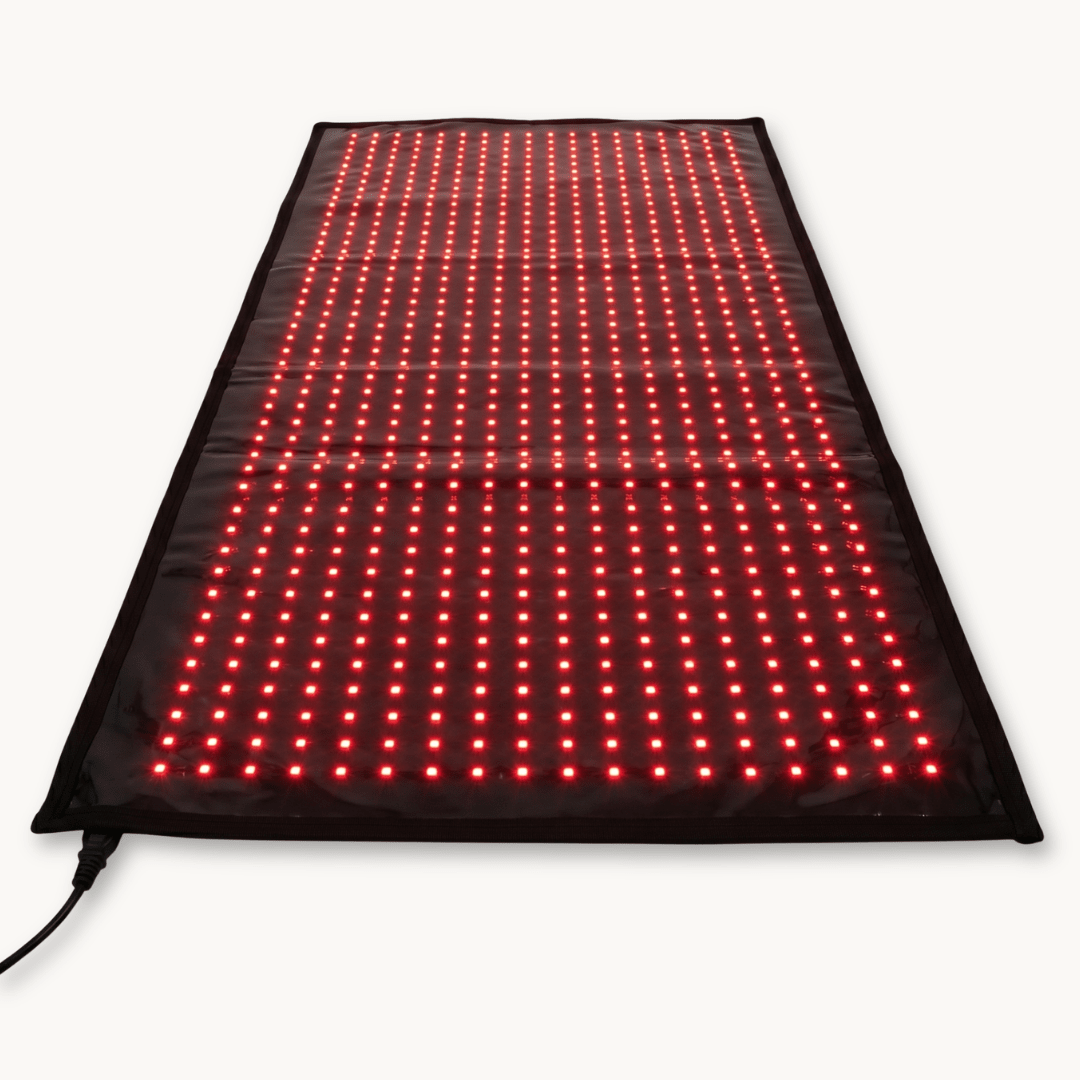
Red Light Therapy Mat
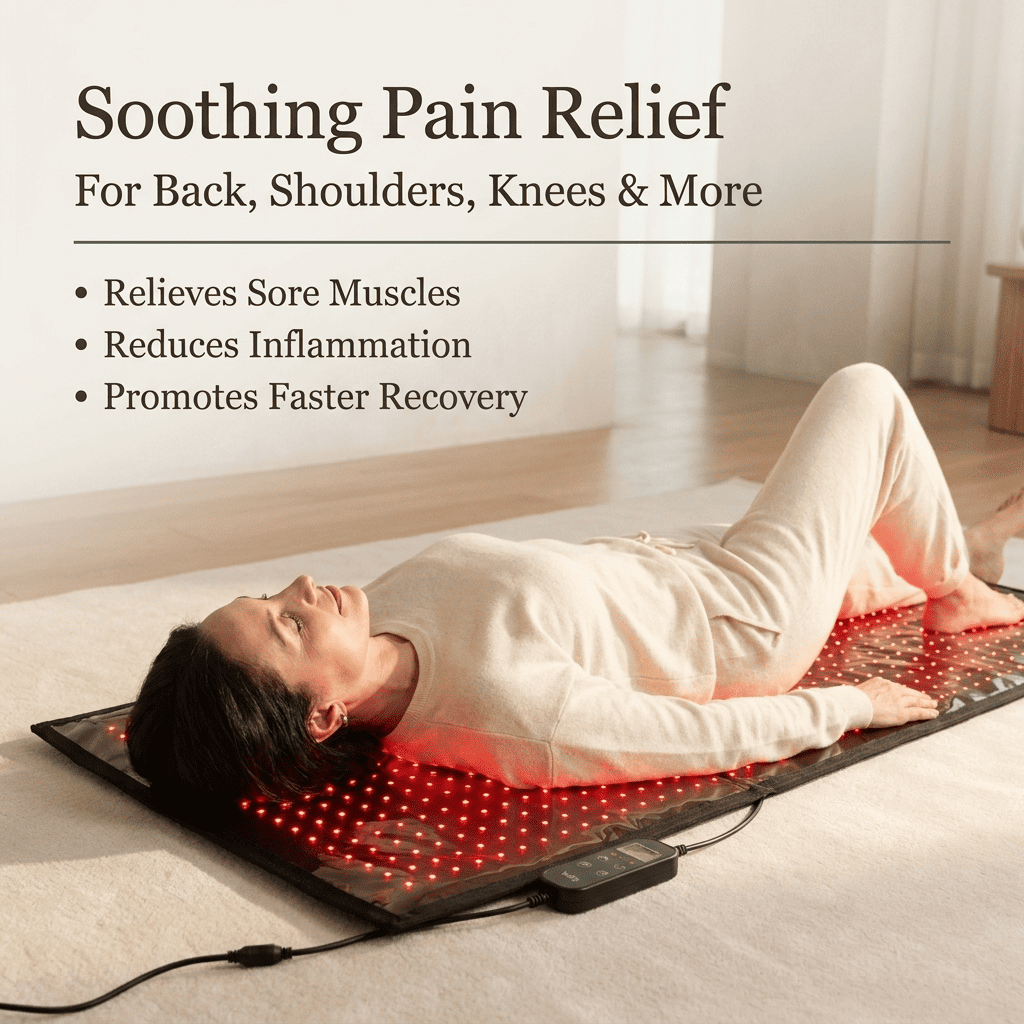
Eases everyday aches and morning stiffness
Recover faster from the days that wear you down
Wind down into deeper, easier sleep
Smoother, firmer-looking skin
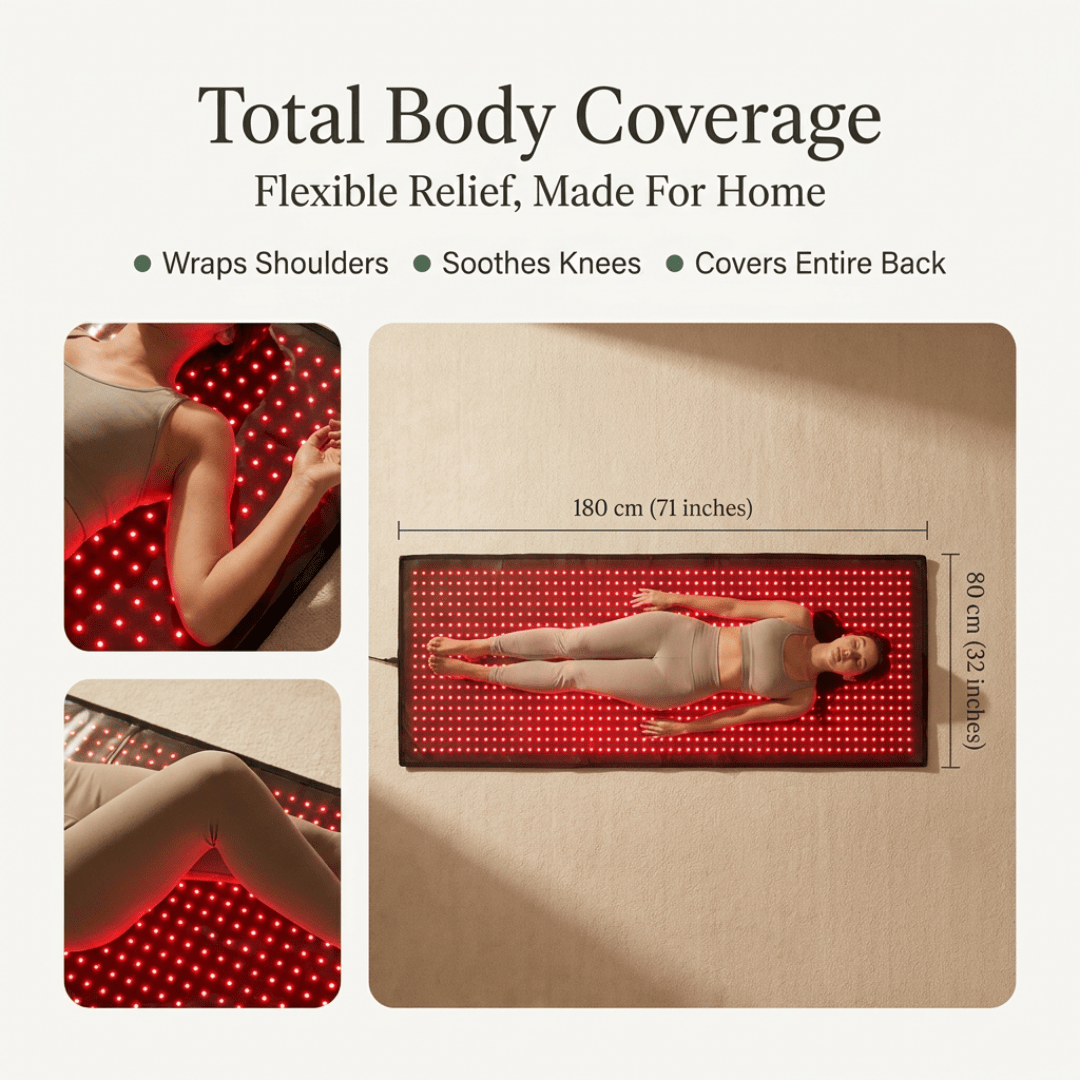
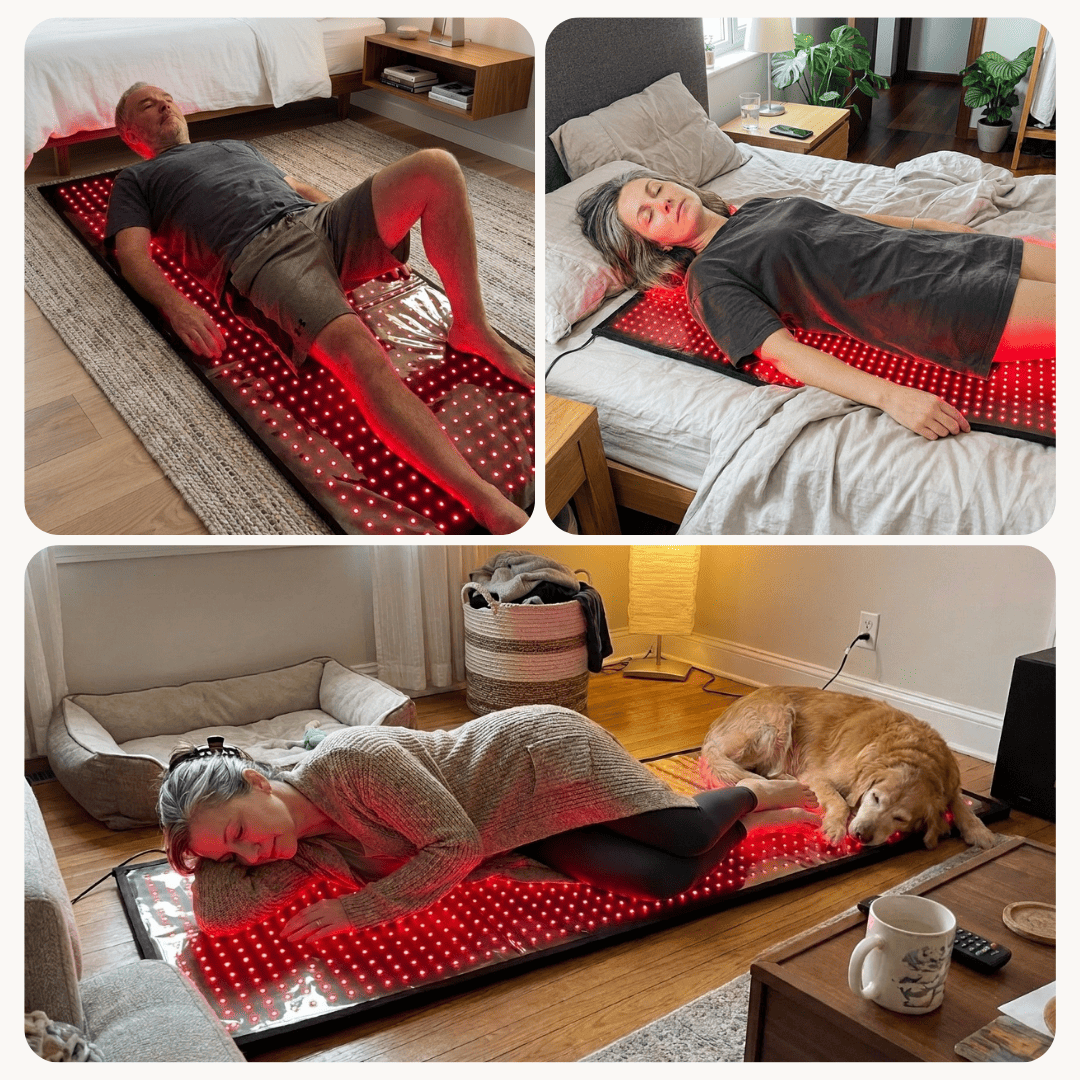
Your whole body soothed at once, lying down
Thirty quiet minutes a day, then rolled away
Arrives damaged? We send a replacement, free.
- Red Light Therapy Mat
- Controller
- Power cable (Plug type matched to your shipping destination)
- User manual
Light
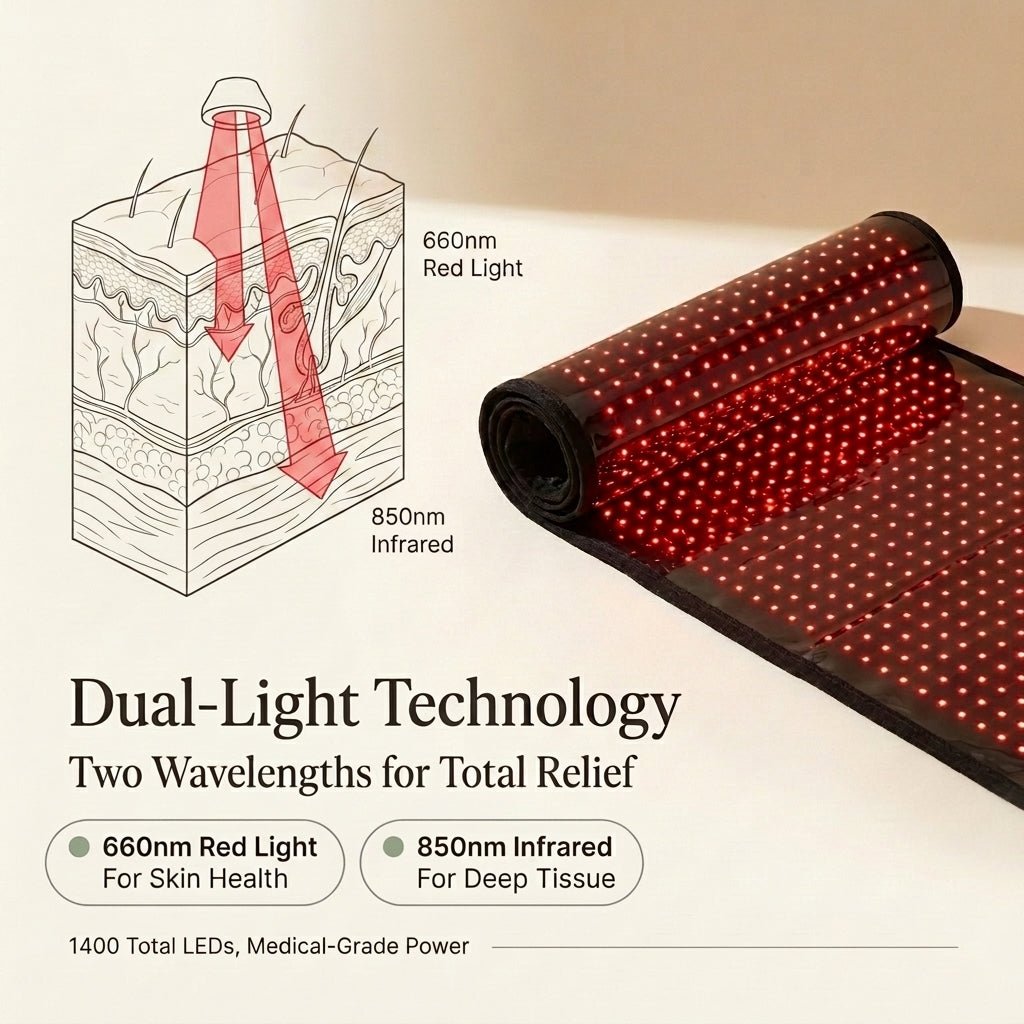
Wavelengths: 660nm red and 850nm near-infrared
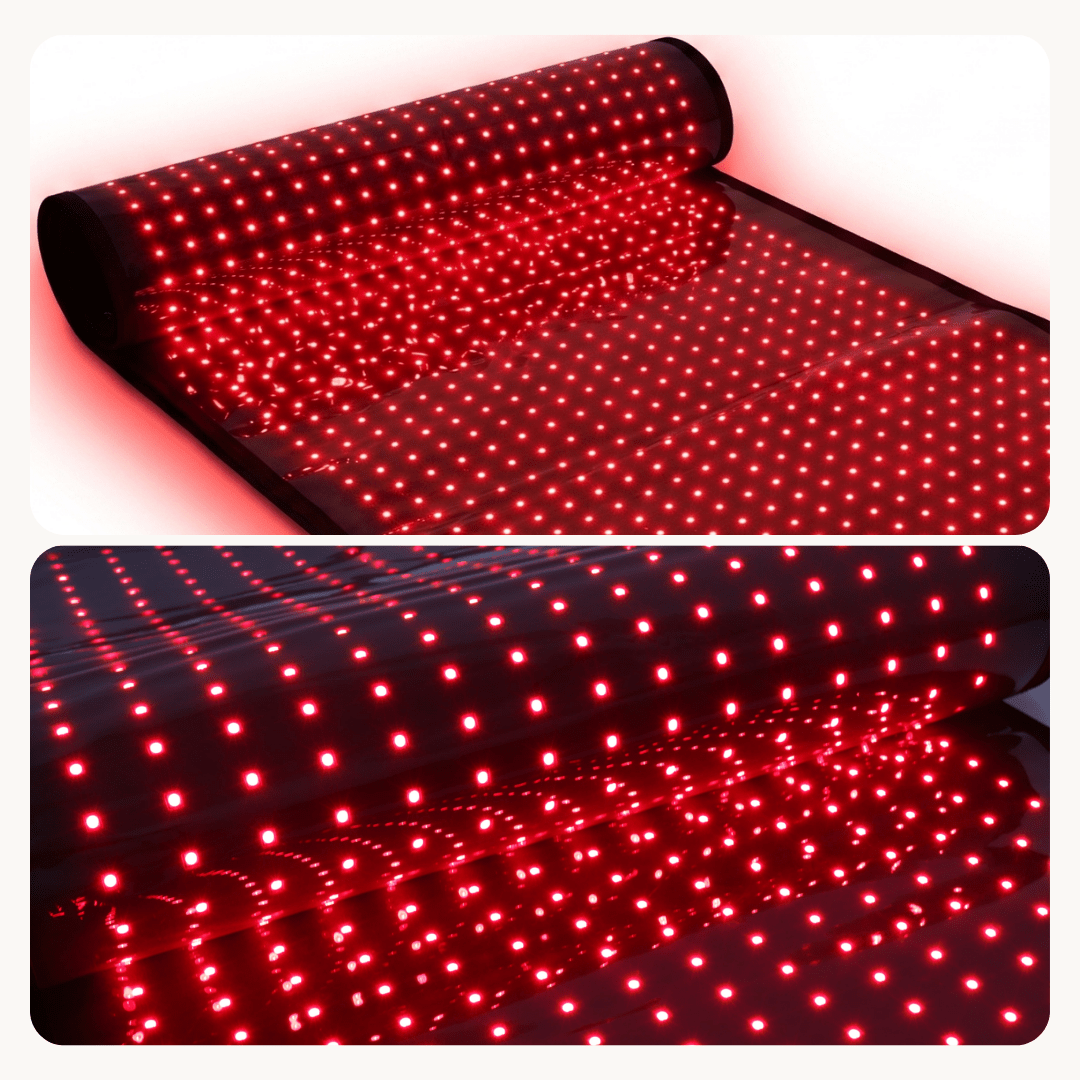
LED count: 1400 (triple-chip)
Irradiance at contact: 164 mW/cm2
Controller
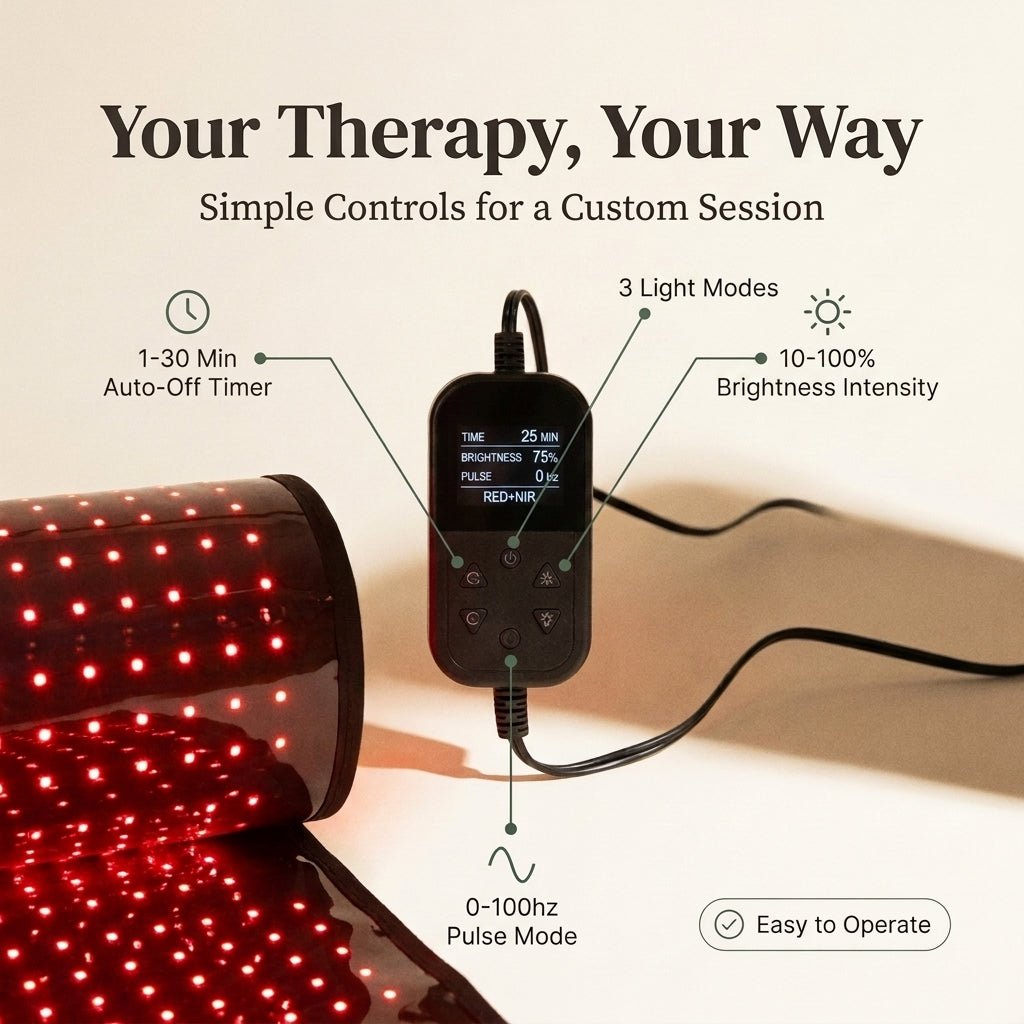
Brightness adjustment: 10-100%
Frequency modes: 0-100Hz
Timer: 1-30 minutes, auto shutoff
Power
Max power: 130W
Plug type matched to your shipping destination.
Physical
Dimensions: 180 x 80 cm
Weight: 7.3 kg
Surface: skin-safe silicone, OEKO-TEX certified
Certifications: CE, RoHS, REACH
Shipping: We offer free shipping on all orders. Most orders arrive within 6-11 business days.
Returns: Items can be returned within 60 days of delivery if unused and in original condition.
Warranty: 2 years. If it fails within the first two years, email us at studio@discoversoln.com and we will sort it.
What the science has measured.
Findings from light-therapy studies. Tap a number for the source.
Reduction in chronic joint pain at week 12.Bjordal et al., 2003 meta-analysis, Aust J Physiother
See the studyIncrease in collagen density after 12 weeks.Wunsch and Matuschka, 2014 RCT, Photomed Laser Surg
See the studyFaster muscle recovery after exertion.Leal-Junior et al., 2015 review, Lasers Med Sci
See the studyImproved sleep quality scores within 8 weeks.Zhao et al., 2012, J Athletic Training
See the studyClinical references
- Hamblin MR (2018). Mechanisms and Mitochondrial Redox Signaling in Photobiomodulation. Photochem Photobiol. 94(2):199–212. DOI: 10.1111/php.12864. Reviewed the cellular mechanisms by which red and near-infrared light stimulate mitochondrial cytochrome c oxidase and ATP synthesis.
- Avci P, Gupta A, Sadasivam M, et al. (2013). Low-level laser (light) therapy (LLLT) in skin: stimulating, healing, restoring. Semin Cutan Med Surg. 32(1):41–52. PMID: 24049929. Studied photobiomodulation effects on skin healing, collagen synthesis, and inflammatory markers.
- Bjordal JM, Couppé C, Chow RT, et al. (2003). A systematic review of low-level laser therapy with location-specific doses for pain from chronic joint disorders. Aust J Physiother. 49(2):107–116. PMID: 12775206. Meta-analysis: LLLT showed clinically significant reductions in chronic joint pain at the studied dose ranges.
- Wunsch A, Matuschka K (2014). A controlled trial to determine the efficacy of red and near-infrared light treatment in patient satisfaction, reduction of fine lines, wrinkles, skin roughness, and intradermal collagen density increase. Photomed Laser Surg. 32(2):93–100. RCT measured intradermal collagen density increases after 30 sessions of red and near-infrared exposure.
- Leal-Junior EC, Vanin AA, Miranda EF, et al. (2015). Effect of phototherapy (low-level laser therapy and light-emitting diode therapy) on exercise performance and markers of exercise recovery: a systematic review with meta-analysis. Lasers Med Sci. 30(2):925–939. Systematic review found phototherapy reduced muscle fatigue markers and accelerated recovery after exercise across studies.
- Zhao J, Tian Y, Nie J, et al. (2012). Red light and the sleep quality and endurance performance of Chinese female basketball players. J Athletic Training. 47(6):673–678. 14-day red light exposure protocol associated with measurable sleep quality score improvements in the studied athlete group.
- Whelan HT, Smits RL Jr, Buchman EV, et al. (2001). Effect of NASA light-emitting diode irradiation on wound healing. J Clin Laser Med Surg. 19(6):305–14. PMID: 11776448. NASA-funded research on near-infrared LED light and tissue recovery in human cells.
A year at the clinic. Or the mat, once.
A clinic red light session runs $40 to $80. Two sessions a week for a year is $4,160 or more. The mat is one purchase, with no repeat cost.
One payment, then nothing per session. No appointment, no commute. FSA / HSA eligible where applicable.
From the people using it.
Stories from real customers across pain, skin, recovery, and sleep.
Six years of weekly chiropractic at $120. By week six the mornings were different, and by week ten my chiropractor moved me to monthly. It lives behind the sofa now.
Right rotator cuff repair in February. My surgeon said red light could help if I stayed disciplined. The first fortnight I felt nothing, then by week eight my physio said the soft-tissue response was ahead of schedule.
Joint pain showed up in my late forties out of nowhere. HRT and magnesium helped, this added the rest. By week four the morning stiffness was lighter and my knees stopped sounding like a coffee grinder.
My face mask was leaving the rest of me behind. Eight weeks of full-body sessions and the texture on my chest and arms started to catch up.
I had done mask sessions for two years and added the mat for the rest of me. By month two my dermatologist noticed the change under my jaw before I mentioned it.
I work outside and the backs of my hands had been a giveaway for years. Three months of evening sessions and the texture is closer to my forearms again.
I play four times a week and the day-after soreness was eating my schedule. Twenty minutes on the mat after each session and the soreness roughly halved. Whoop recovery up a full band in a month.
I added the mat during my training block. Nothing the first week, then by week three the heavy legs the day after a long run had gone. I kept it through race week.
Coach suggested it for sleep. I kept using it on the days I would normally feel beaten up, and the chronic soreness in my hip flexors is mostly gone after eleven weeks.
I had been waking around 3am for two years. A calm thirty-minute session in the evening, and by week four I was sleeping through to the alarm most nights. Oura confirms it.
HRT helped the day. The nights were still broken. Eight weeks of evening sessions and the broken nights are now the exception, not the rule.
I do night shifts twice a week and coming down afterwards had become hard. It is big, and I nearly gave up in week one, but leaving it rolled by the sofa fixed that. Six weeks in I sleep through my recovery days.
Individual experiences. Results vary from person to person.
What clinicians tell us.
Clinician note
I point patients to red light because the science on combined 660 and 850 is sound, and the hard part is consistency. A full-body mat you lie down on solves consistency in a way a panel on a stand rarely does. It is a recovery tool that compounds, not a quick fix, and it does not replace care for an acute injury.
Dr. Erin Caldwell, DPT, OCS
Orthopaedic physical therapist
Clinician note
As a physiatrist I am cautious about home devices, but the data on photobiomodulation at these wavelengths is reasonable, and the limiting factor for most people is sticking with it. Something you use at home, lying down, actually gets used. I frame it as support for recovery and sleep, not a treatment for any diagnosed condition, and I tell people to keep their own doctor in the loop.
Dr. Julian Whitfield, MD
Physical medicine and rehabilitation
The build, layer by layer.
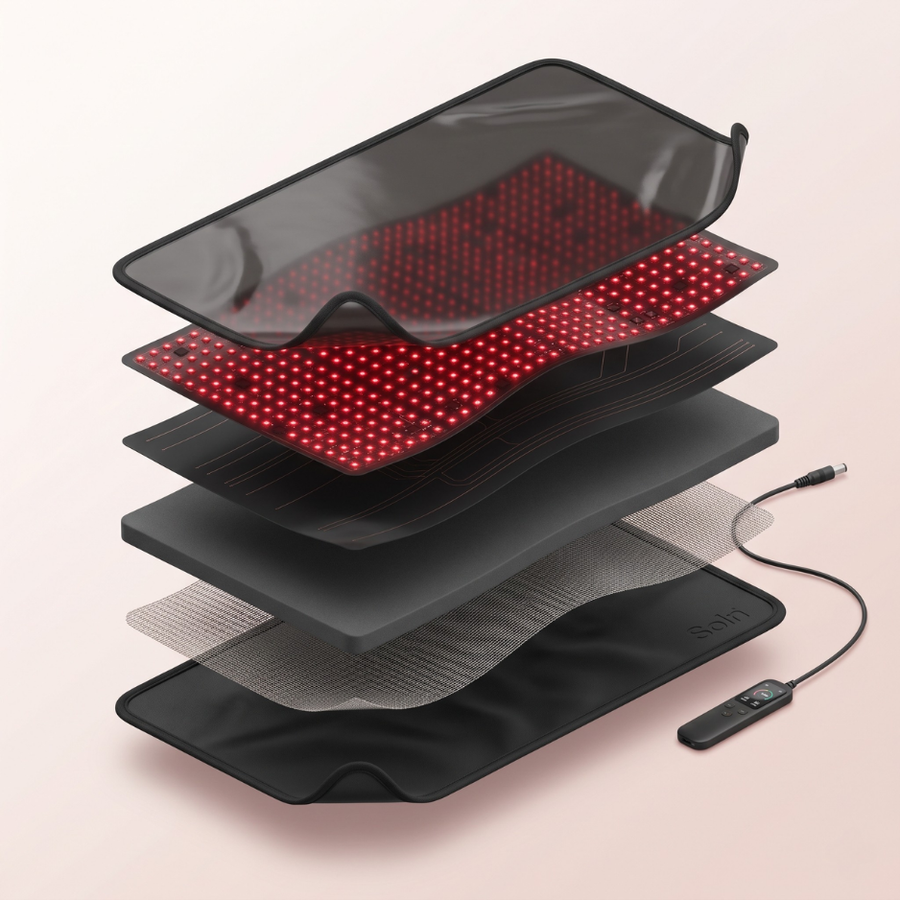
Skin-safe silicone, OEKO-TEX certified
Non-toxic, wipeable, no off-gassing. The chemical-smell complaint in every budget-mat review is structurally prevented here.
1400 triple-chip LEDs, 660 and 850nm
Red and near-infrared together, against the skin, so no distance loss and no reflection. Around 164 mW/cm2 at direct contact.
Sealed against flex fatigue
The LED layer is sealed in a flexible lamination built to defeat the solder-joint failure that kills cheap mats after a few months of rolling.
Flicker-free, modular controller
The driver runs below the visible-flicker threshold. The controller is modular, with replacements kept in regional stock, so a failed button is never a failed mat.
Reinforced bend radius
An insulating backing protects the LED layer from compression. A single marked fold seam is designed to be rolled thousands of times without solder fatigue.
Three honest ways to do this
Where the mat sits.
You have probably already considered all three.
The gamble
Unpublished irradiance, off-gassing, solder-joint failure inside a year.
The one you keep
Published irradiance, OEKO-TEX silicone, built against flex failure, pays for itself.
The overpay
A $1,000 panel you do not need lying down, or a clinic you pay forever.
The $300 mat
The gamble.
- Visually similar to the $750 mats, for less.
- Irradiance unpublished, or quoted from a solar meter.
- A faint burning-plastic smell out of the box.
- Around month four, a dead row of LEDs at a solder joint.
- Support stops replying once the return window closes.
- You start shopping again.
Soln, the one you keep
The mat.
- Roll it out by the sofa. Twenty to thirty minutes while you read. Roll it away.
- One purchase. Years of daily sessions, not a subscription.
- Published irradiance, OEKO-TEX silicone, built against flex failure.
- Local support that stays reachable if you ever need it.
Pays for itself, then keeps going.
The $1,000 panel or the clinic
The overpay.
- A premium panel runs $1,000 and up for peak power you do not need lying down.
- Or the clinic: book, park, sit in the waiting room, drive home.
- $40 to $80 a session, on someone else's schedule.
- Two visits a week to hold it, miss a fortnight and progress slips.
- Either way you keep paying, indefinitely, for what you could own.
Before you add to cart
Is this the right mat for you?
Where are you right now?
Why red light therapy works.
Photobiomodulation has been studied in peer-reviewed research since the 1960s, and NASA researchers studied near-infrared LED light and tissue recovery in the 1990s. The mat delivers 660nm and 850nm together, at the surface and at depth, in one session.
Skin surface
collagen, fine lines, texture
660nmDeeper tissue
joint, muscle, post-surgical
850nmCell
mitochondria, ATP
660 + 850Whole body, evening
circadian, sleep continuity
calm session660nm, where the skin lives.
Red light at 660nm is absorbed by cytochrome c oxidase in skin-cell mitochondria. The studied response is increased collagen synthesis and reduced inflammatory markers, which is why many users describe smoother texture after eight weeks.
850nm, into the deeper tissue.
Near-infrared at 850nm reaches further than red, into joint, muscle, and post-surgical tissue. The studied mechanism is reduced inflammation at depth and faster soft-tissue repair.
ATP, the fuel that compounds.
Photobiomodulation increases mitochondrial ATP production. The studied effects are faster recovery and less post-exertion soreness, which is why daily users describe shorter recovery windows.
An evening session that supports sleep.
An unhurried evening session supports the body's natural circadian rhythm and the melatonin signalling pathway. The studied effect is improved sleep continuity over weeks, and users who run a calm evening session often describe quieter middle-of-night waking.
In 2001, NASA researchers published work on near-infrared LED light and tissue recovery (Whelan et al., 2001). The same wavelength science is what today's red light devices are built on.
Whelan HT et al., J Clin Laser Med Surg, 2001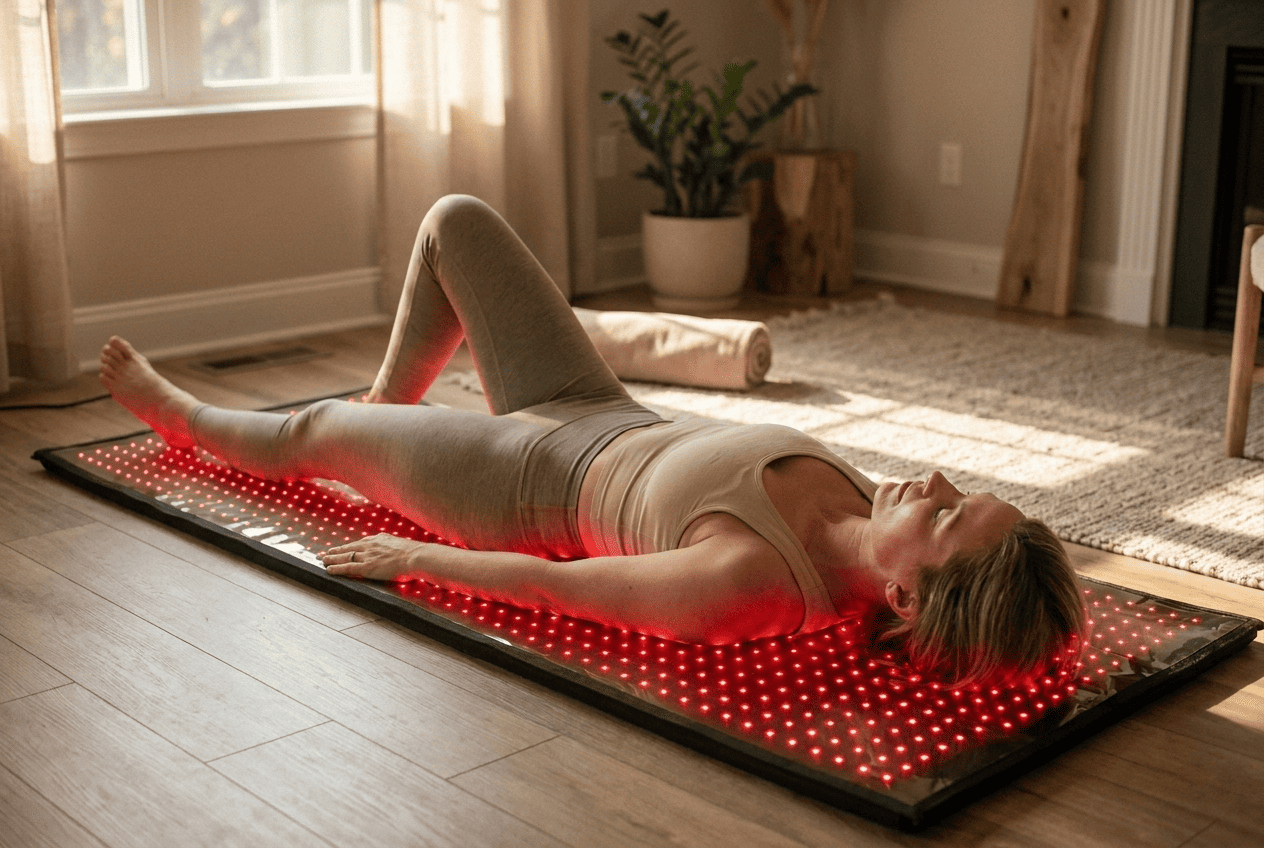
Weeks 1 to 2: warmth, sometimes better sleep.
You may feel the warmth and sleep a little easier. You probably will not see anything change yet, and that is normal. Week two is exactly when people quit, right before anything has had time to show.
Weeks 3 to 4: the first shifts.
Lighter morning stiffness for many users. Shorter recovery after exertion. The mornings without bracing against the wall that the long-term users describe.
Week 8: the compounding shows.
This is the milestone most reviewers point to, when daily use has had time to stack. Skin texture, sleep, and stiffness are where people most often notice it. Individual experience, results vary.
Your first 60 days, with you.
A named contact you can reply to, reachable in your region. You have 60 days to return it for a full refund. The mat carries a 2-year warranty, and it is built to outlast it.
Frequent Questions
Will it last, and what happens if it breaks?
Most cheap mats fail at the solder joints from repeated rolling, so we seal the LED layer in flexible lamination and reinforce the fold seam. It carries a 2-year warranty, a 60-day return window, and spare controllers kept in regional stock, so a failed part is sorted quickly rather than ghosted.
Should I get the mat or a panel?
A panel gives the highest peak intensity on one small area. A mat gives full-body coverage lying down and the consistency that actually drives results. If you want one zone treated hard, our panel is the better tool. If you want whole-body recovery you will keep up, that is this mat.
Can I run red light only, or near-infrared only?
No, and that is by design. The mat runs 660nm and 850nm together, because the studied protocols use combined exposure. You vary brightness, frequency, and time, not wavelength.
What is the irradiance?
Around 164 mW/cm2 at direct skin contact, combined. Because the mat sits against the skin, there is no distance loss or reflection.
Is it safe for daily use?
Yes for general wellness use. If you are pregnant, photosensitive, on photosensitising medication, or managing an active medical condition, check with your clinician first. Protective glasses are included, use them.
How soon will I notice anything?
Many users feel warmth and easier sleep in the first weeks, with stiffness and recovery shifts more often described between weeks four and eight. Week two is when people quit, so the honest ask is to give it through week four.
°
Our name
Two origins, one purpose
Solen, the Swedish word for sun.
SOLN, Science Of Light and Nature.
Our name holds both: ancient recognition of light's restorative properties and modern understanding of how wavelengths interact with the body. Soln makes wellness technology that bridges the two. The wavelengths used in clinical research, designed for home.
What you'll feel

Built for the body that carries everything
For years, professional-grade wellness technology meant clinical environments and the compromises of shared spaces. Soln exists to collapse that distance, bringing the depth of a considered, unhurried session into spaces that feel like your sanctuary. We believe you should not have to choose between precision and comfort.
What's measured
The science behind
The sun delivers infrared and red light wavelengths naturally. Your body recognizes them. Infrared penetrates tissue, you feel it as deep warmth. Red light reaches structures beneath the skin. PEMF creates electromagnetic fields your cells can detect. These wavelengths have been studied in clinical and athletic settings for decades. Soln devices deliver them with precision, calibrated to the ranges researchers have documented.