
PEMF Mat
Fall asleep faster, stay asleep longer
Wake genuinely restored, not just awake
Recover quicker from stress, travel, and training
Loosen stiff hips and a tight lower back
A calm thirty minutes to close the day
Arrives damaged? We send a replacement, free.
PEMF Mat
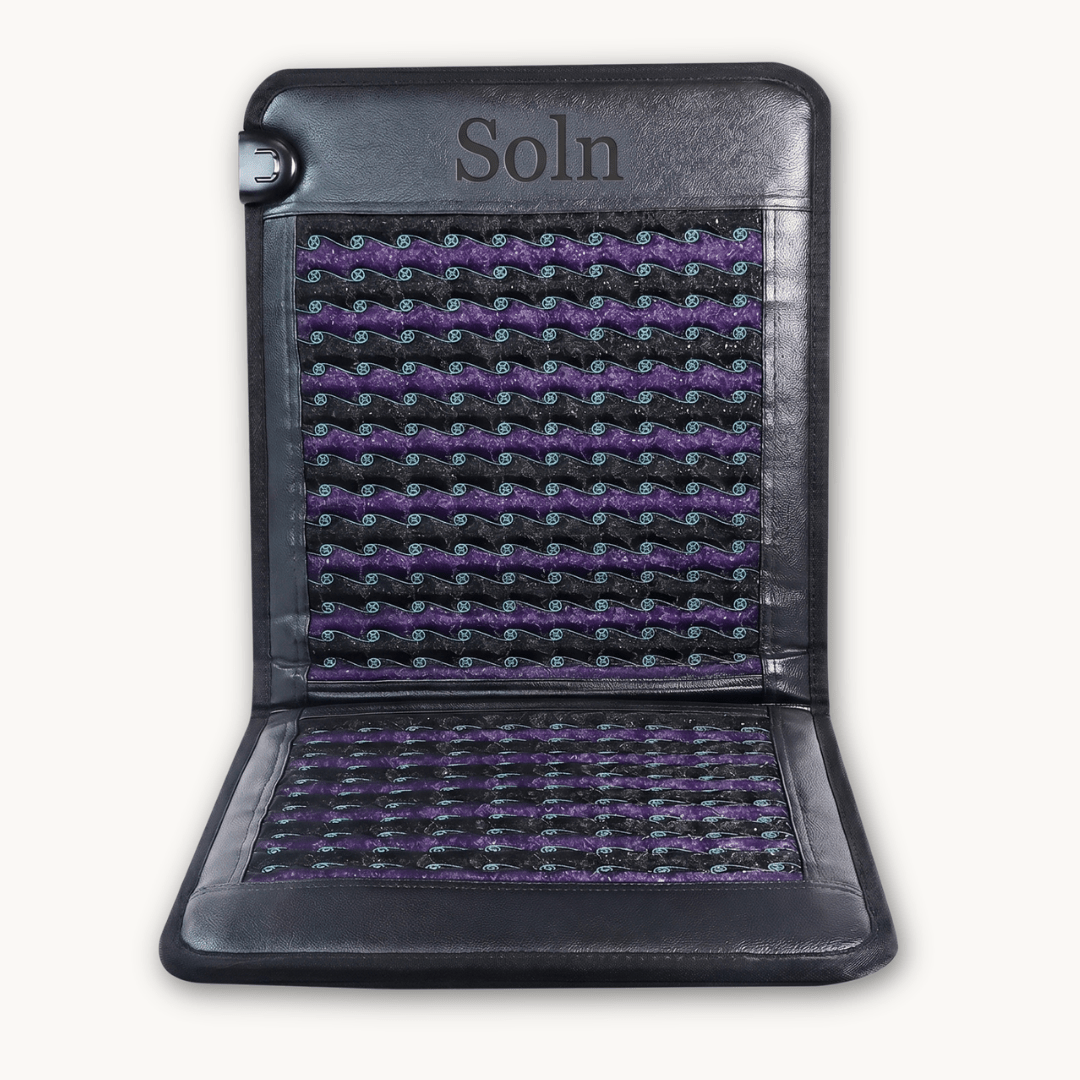
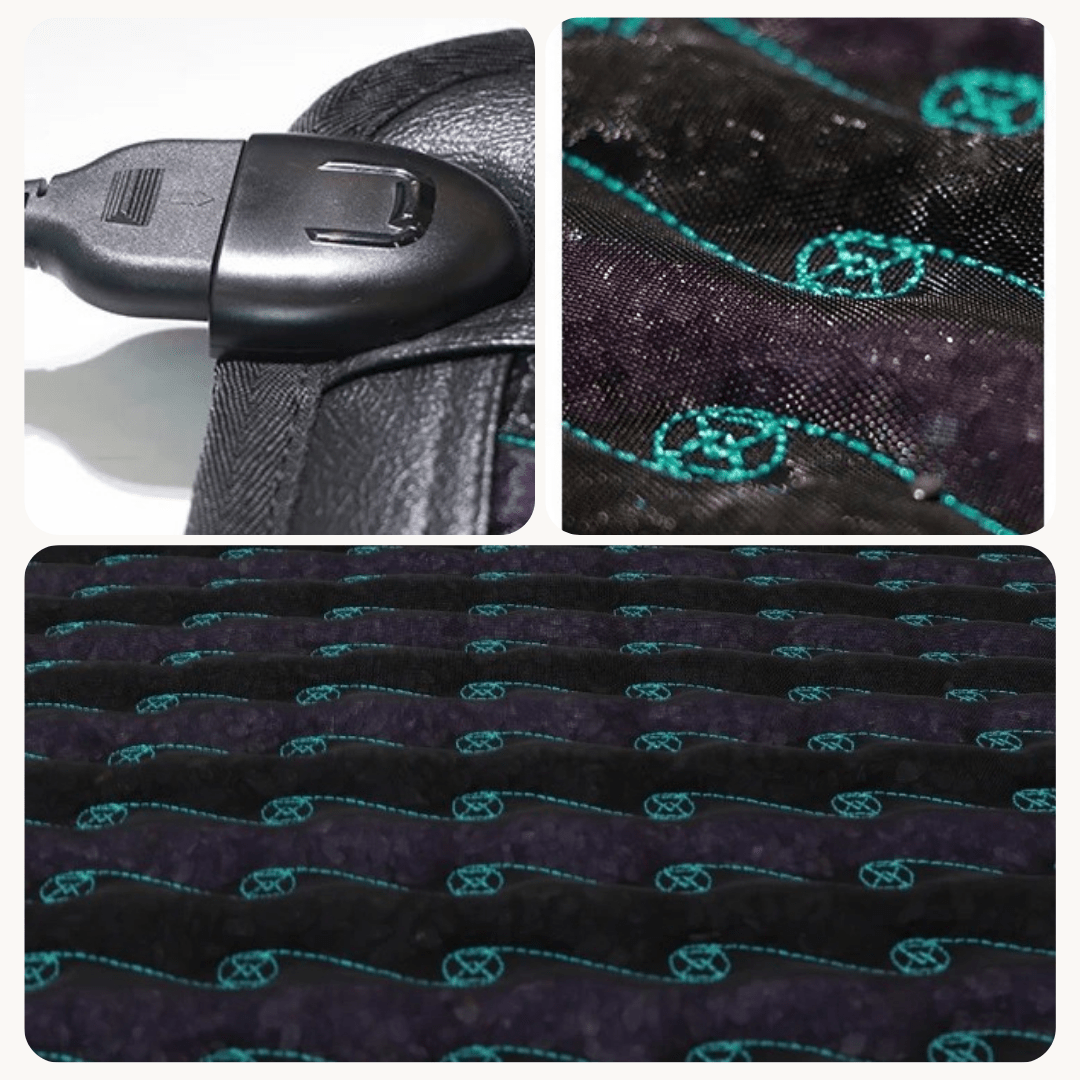
Foldable mat. Copper PEMF coil array. Far-infrared gemstone heat layer. Skin-safe, non-toxic surface.
Controller
Nine frequency settings (2.5 to 30 Hz). Timer and auto-shutoff. Power cord with universal 100 to 240V supply.
PEMF signal tester
Confirms the field is active.
Storage bag
User manual and first-30-days protocol card
PEMF
Frequency settings: 9 (2.5, 5.5, 7.8, 10, 15, 17.5, 20, 23, 30 Hz)
Peak Intensity: 15 Gauss
Coil: copper coil array
Waveform: pulsed low-frequency
Far-infrared
Temperature range: 30–75°C
Heating element: low-EMF wire
Gemstones: amethyst, jade, tourmaline
Power & safety
Input: 100–240V
Power: 100W
Timer: 1–9 hours, auto-shutoff
Certifications: CE, UKCA, RoHS, ISO
Surface: skin-safe, non-toxic
Physical
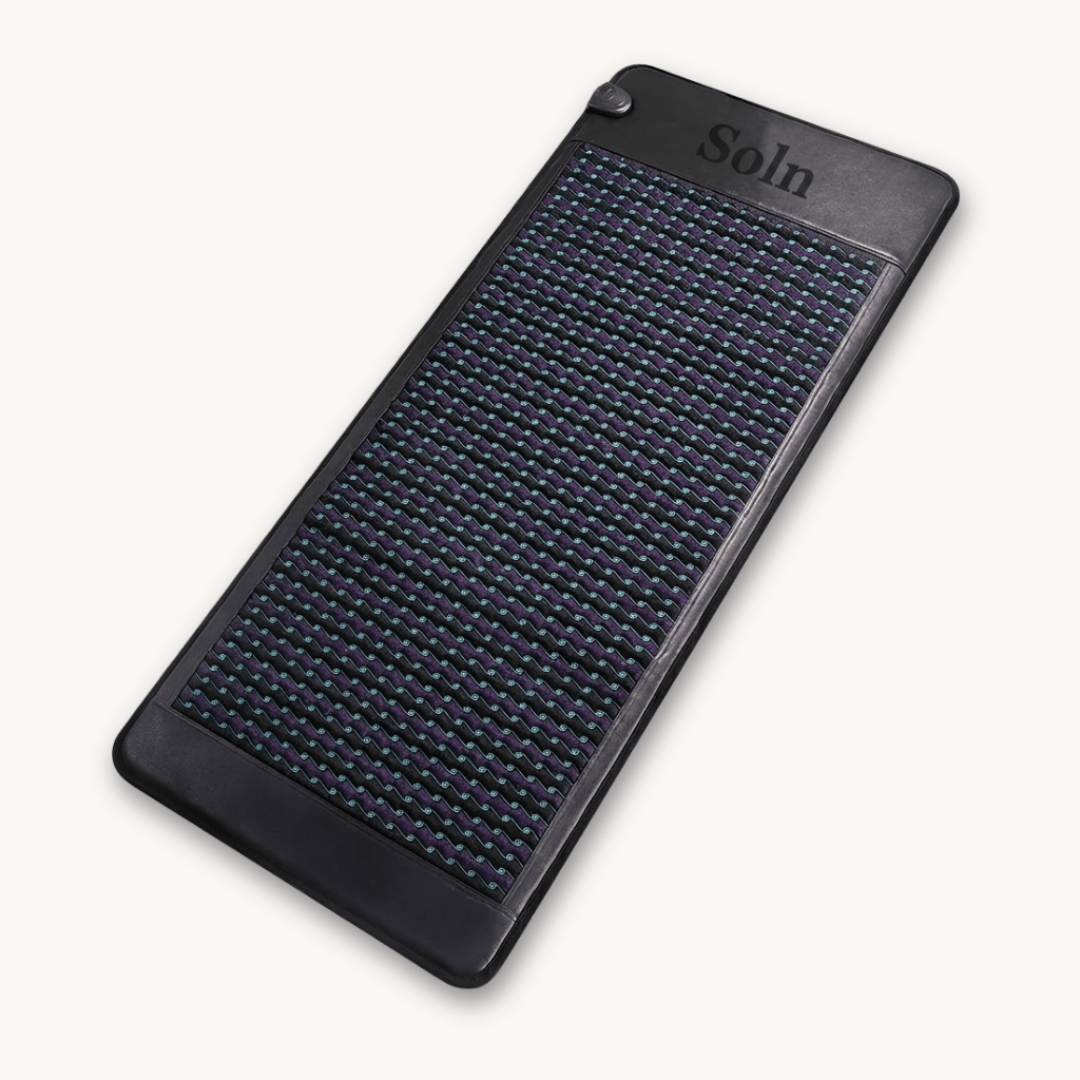
Both sizes are the same PEMF mat: identical coil array, frequency settings, intensity, far-infrared heat and gemstone layer. Choose by the coverage you want.
100 (standard): 100 × 50 cm unfolded, folds to 50 × 50 cm. Compact and portable: use it on a chair, sofa, bed or the floor.
180 (full-length): 180 × 80 cm unfolded. Full-body coverage for lying down.
Shipping: We offer free shipping on all orders. Most orders arrive within 6-11 business days. For full details, see our shipping policy.
Returns: Items can be returned within 60 days of delivery if unused and in original condition. For more information, please visit our refund policy.
Warranty: 2 years. If it fails within the first two years, email us at studio@discoversoln.com and we will sort it.
The evidence
What the science has measured
Findings from light-therapy studies.
Less pain than physio alone.Paunescu et al., 2025 RCT, Pain and Therapy, n=91
See the study →Better sleep within four weeks.Pelka et al., 2001 placebo-controlled, n=101
See the study →Faster recovery after a hard session.Jeon et al., 2015 placebo-controlled, Physical Therapy in Sport
See the study →Stopped painkillers entirely.Bagnato et al., 2016 RCT, Rheumatology (Oxford)
See the study →Clinical references
- Sisken BF, Walker J (1995). Therapeutic aspects of electromagnetic fields for soft-tissue healing. Bioelectromagnetics Suppl. 3:277–285. Reviewed how PEMF supports soft-tissue healing at the cellular level.
- NASA Technical Memorandum 2003-212054. Pulsed Electromagnetic Fields: A Countermeasure for Bone Loss and Muscle Atrophy. Goodwin TJ. Studied PEMF as a countermeasure for muscle atrophy and bone loss in astronauts.
- Paunescu A et al. (2025). Evaluating noninvasive pulsed electromagnetic field therapy for joint and soft tissue pain management: a prospective, multi-center, randomized clinical trial. Pain and Therapy. 14:723–735. NCT05244187. PEMF group showed a 36% greater reduction in joint pain than clinician-prescribed standard care.
- Ross CL et al. (2017). The effect of low-frequency electromagnetic field on human bone marrow stem cell differentiation. J Orthop Res. Examined how low-frequency electromagnetic fields influence stem-cell differentiation.
- Pelka RB, Jaenicke C, Gruenwald J (2001). Impulse magnetic-field therapy for insomnia: a double-blind, placebo-controlled study. Adv Ther. 18(4):174–180. 70% of insomnia participants reported substantial or complete relief over four weeks of PEMF use.
- Jeon HS et al. (2015). Effects of pulsed electromagnetic field therapy on delayed-onset muscle soreness in biceps brachii. Physical Therapy in Sport. 16(1):34–39. PEMF group recovered to near-baseline at 72h post-exercise; sham group remained significantly sore.
- Bagnato GL et al. (2016). Pulsed electromagnetic fields in knee osteoarthritis: a double blind, placebo-controlled, randomized clinical trial. Rheumatology (Oxford). 55(4):755–762. 26% of PEMF participants stopped using painkillers entirely; pain scores dropped 25% vs baseline.
What shifts when you use it daily.
PEMF doesn't feel like anything during the session. That's not a defect. It's how pulsed electromagnetic fields work. The changes are cellular, and they compound.
Working below the surface, not just on it.
PEMF fields pass through soft tissue rather than warming the skin like heat. They interact with the natural electromagnetic charge that every cell carries the same mechanism studied in the references at the bottom of the page. The wound-up shoulders, the tight jaw, the back that wakes you at 3am: daily users describe these softening over time.
Deeper sleep. Architecture, not sedation.
The lowest setting, 2.5 Hz, sits in the delta band the brain runs in deep sleep. The 3am waking that magnesium and melatonin haven't helped with. Some daily users running a low evening setting describe sleep-tracker shifts within the first month.
The downshift from wired to restored.
The 7.8 Hz setting sits in the Schumann resonance band, a low frequency used in published PEMF protocols (see references below). Twenty minutes there. The wound-up shoulders soften. The tight jaw releases. Not relaxation as a feeling. Restoration as a process.
Recovery that accumulates.
PEMF research has studied how pulsed fields support cellular energy production at the mitochondrial level. Daily users often describe shorter recovery windows from workouts, long-haul flights, and high-stress weeks. Some track HRV changes; others notice the mat simply becomes the most-used object in the house.
Verified it's working.
The included PEMF signal tester responds to the active field. Place it on the mat surface during your session. Confirmation the field is on, every session.
Even field, no dead zones.
A copper coil array runs across the mat. 15 Gauss measured at the coil. No dead zones between coils: the field stays even across the surface.
Nine settings. No manual to memorise.
Nine frequency settings from 2.5 to 30 Hz. Low settings for sleep and grounding, higher settings for daytime and recovery. Timer. Auto-shutoff. The controller the ICP told us to make simpler.
Warmth that reaches deeper.
Far-infrared heat layer (30–75°C) operates independently from PEMF. Use together or separately. The warmth is surface-level: the field is what goes deep.
Skin-safe, wipe-clean surface.
Non-toxic, non-off-gassing surface that wipes clean with a damp cloth. The smell complaint from every budget mat: solved.
The science
Why pulsed electromagnetic fields work.
PEMF has been studied in peer-reviewed research since the 1970s. NASA studied it for astronaut recovery. The mechanism is cellular. The studied effects compound across multiple body systems. Here is what happens at the biological level.
Sisken & Walker (1995), Bioelectromagnetics · NASA TM-2003-212054
Working below the surface, not just on it.
PEMF fields pass through soft tissue rather than warming the skin like heat. They interact with the natural electromagnetic charge that every cell carries the same mechanism studied in the references below. Users with persistent stiffness often describe shorter morning warm-up periods.
Sleep architecture, not sedation.
The lowest setting, 2.5 Hz, sits in the delta band the brain runs in deep sleep. The result isn't drowsiness it's alignment with the biological rhythm the body is already moving toward. Users running a low evening setting have reported quieter middle-of-night waking over time.
Nervous system, downshifted.
The 7.8 Hz setting sits in the Schumann resonance band, a low frequency used in published PEMF protocols (see references below). Twenty minutes there. The wound-up shoulders soften. The tight jaw releases. Wired and tired becomes something that melts.
Cellular recovery, accumulating.
PEMF research has studied how pulsed fields interact with voltage-gated calcium channels and membrane potential at the cellular level the mechanism named in the peer-reviewed literature below. Daily users often describe shorter recovery windows after workouts, flights, and high-stress weeks.
In 2003, NASA studied pulsed electromagnetic fields as a countermeasure for bone loss and muscle atrophy in astronauts. The same underlying biological response sits behind the protocols studied for home wellness use.
NASA Technical Memorandum 2003-212054 (Goodwin TJ)Before you add to cart
Is this the right mat for you?
Worth a minute. We'd rather help you decide well than ship you the wrong thing.
Choose this mat if …
- You've tried physio, magnesium, supplements and want something that compounds with daily use.
- You're spending £250–500/month maintaining your body and want some of that spend to land at home.
- You want a mechanism, not a mood. The specs are visible above and you actually read them.
- You'll commit to 20–30 minutes a day for the first eight weeks. Daily use is when this works.
- Sleep, pain, or nervous system recovery is the primary goal.
Choose something else if …
- You want clinical-grade peak Gauss (BEMER, Curatron, £5,000+) for acute injury under practitioner protocol.
- Design is the primary criterion and therapeutic outcome isn't the priority. This mat was built to look considered, but every specification was chosen for what it does, not how it photographs.
- Your primary complaint is skin or anti-aging. Our Red Light Panel is the right modality.
- Your dominant need is post-work decompression and our sauna blanket would serve you better.
- You're not yet sure you'll use it daily. Come back when you are.
Before you add to cart
Is this the right mat for you?
Where are you right now?
From the people using it.
Stories from people using it daily.
"I'd been waking at 3am for a long time. By week four my Oura was showing more deep sleep than it had in months. By week eight I'd stopped tracking it because I was just sleeping."
"Bought expecting to return it. The first two weeks I felt nothing and nearly did. The signal tester was the only thing that kept me going. By week six my Garmin was recording deep sleep readings I hadn't seen in a long time."
"The 3am mind-racing had quieted by week three. By week eight my nights felt different. I told my GP it had become part of my wind-down routine."
"Six months in, I'd shifted how often I needed physio appointments. The morning stiffness I'd lived with for years became noticeably shorter."
"The bad days haven't gone. But they feel shorter and less brutal. That's a change I hadn't found elsewhere in my routine."
"Years of managing this. The mat hasn't changed the underlying picture. But the way my days feel has shifted noticeably."
"I didn't know how braced I was until I wasn't. Three weeks in, my husband commented on how much quieter the evenings had become. I hadn't noticed until he said it."
"I've worn a night guard for years. Three months of evening sessions, and the all-over tightness I carried into bed had softened. I hadn't changed anything else."
"I work shifts. I'd stopped being able to come down afterwards. Six weeks in, my evenings feel different, and I sleep through my days off in a way I hadn't for a while."
"I'd been low on energy for a long stretch. By week six I was managing the walks I'd given up. My HRV had moved over the same period. I'd changed nothing else."
"I started using it as part of my body-recovery cycle. By week four it had become a daily ritual I didn't want to skip the evening session was the thing I looked forward to. I've kept it in my routine since."
"Eight hours of sleep and I'd still feel flat by 3pm. After about five weeks the afternoon crashes were less severe. My Oura HRV climbed over the same period. I'd changed nothing else."
The honest comparison
How we compare.
The four brands you probably also have open, laid out honestly.
| Soln | HigherDOSE | Hooga | BON CHARGE | Clinical PEMF | |
|---|---|---|---|---|---|
| Price | $560 | ~$1,300 | ~$700 | ~$1,300 | $5,000–10,000+ |
| Field intensity | 15 G | 0.5–2 G | 10 G | Undisclosed | High (clinical) |
| Frequency settings | ✓ 9 settings, 2.5–30 Hz | 3–23 Hz | 1–50 Hz | 1–30 Hz | Practitioner-set |
| Safety certifications | CE, UKCA, RoHS, ISO | Varies | Varies | Varies | Varies |
| Warranty | ✓ 2 yr | 1 yr | 3 yr | 1 yr | Varies |
| Local warehouse & support | ✓ | × | × | ✓ | Varies |
| Skin-safe, non-toxic surface | ✓ | × | × | × | N/A |
Clinical PEMF devices like BEMER are built for acute clinical protocols at higher peak Gauss, a different category entirely. For daily home use: published spec sheet, an included signal tester, local operations, and a price built to make the physio maths work.
Materials & safety
The build, layer by layer.

Skin-safe, non-toxic surface
Non-toxic, non-off-gassing material. Wipe clean with a damp cloth. The chemical smell in every budget-mat review: structurally prevented here.
Low-EMF far-infrared heating wire
Operates independently from PEMF. Temperature range 30 to 75°C. Use together for gentle surface warmth; the PEMF field handles the depth.
Natural gemstone layer
Amethyst, jade and tourmaline set across the surface. The stones hold and radiate the far-infrared warmth so the heat spreads evenly across the mat.
Copper coil array
A copper coil array delivers the pulsed field across the mat. Nine frequency settings from 2.5 to 30 Hz. 15 Gauss measured at the coil. Even field, no dead zones between coils.
Low-EMF construction
The heating element uses low-EMF wiring, and the PEMF pulse is a low-frequency field by design. Every mat ships with a signal tester so you can confirm the field is active yourself.
Ten physio appointments. Or the mat. Three years of daily use.
A physio session runs $80–$150. Twice a week for a year is $7,800. The mat has no repeat cost.
Under $1 per session when used daily for three years. No appointment, no commute.

Choose your setting first.
Sleep (evening, 30–60 min before bed): 2.5 Hz, 20 min.
Grounding / nervous system (any time, default): 7.8 Hz, 20–30 min.
Pain & recovery: 10 Hz, 30–45 min.
Morning activation: 20 Hz, 15–20 min.
Nothing to feel is normal.
PEMF fields are invisible. You will not feel the field during the session: that is not a defect. It is how low-frequency electromagnetic fields work. The infrared warmth you may feel is the heat layer, not the PEMF. The changes are cellular. They show up on your sleep tracker before you notice them consciously.
Position and what to wear.
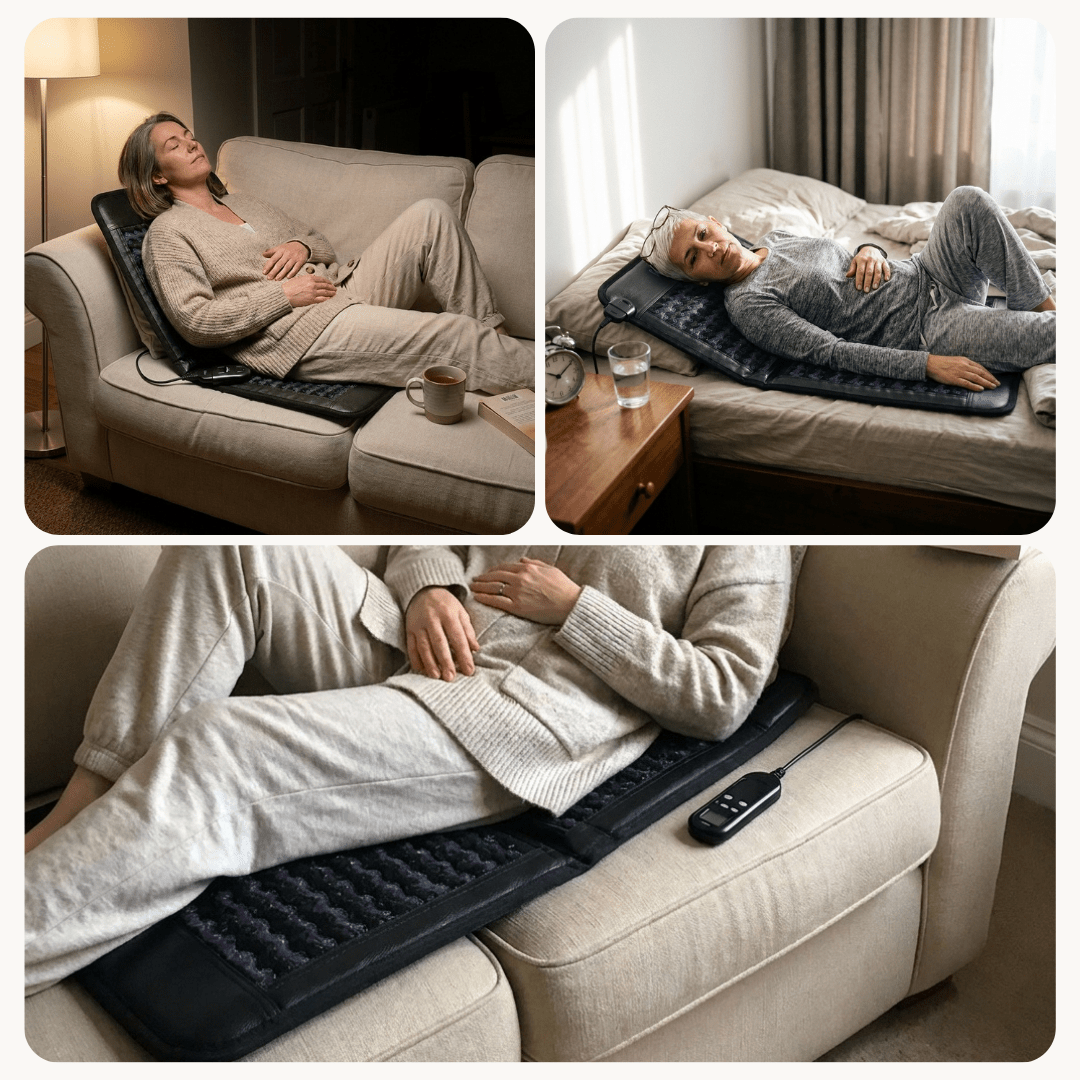
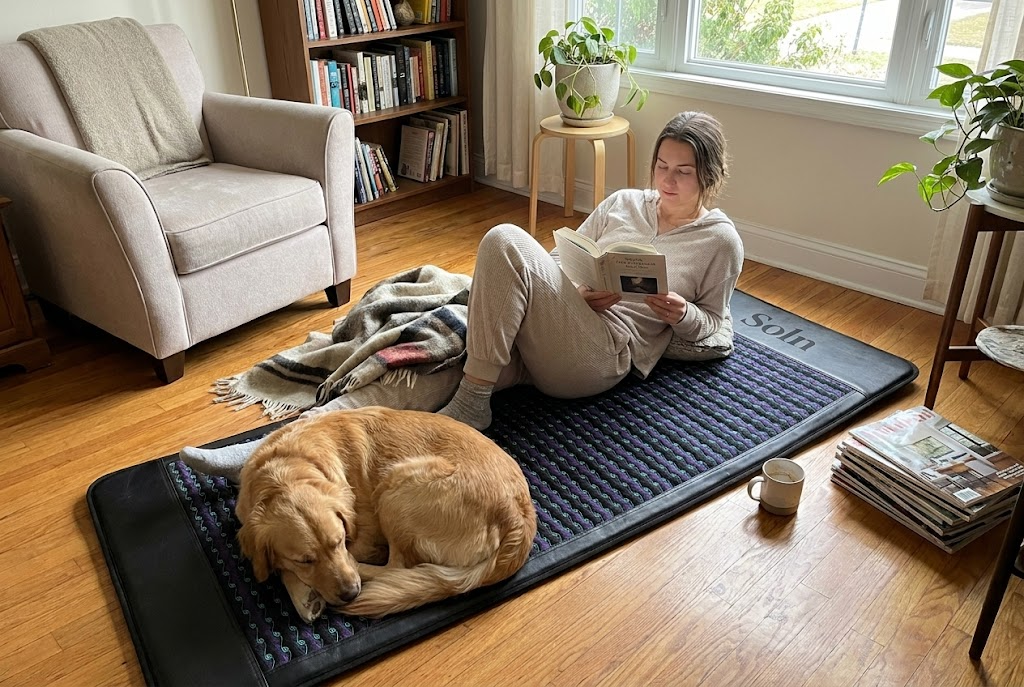
Lie flat or sit. On a yoga mat, sofa, bed, or floor. Lightweight natural-fibre clothing is best. Avoid metal jewellery directly over a coil: not unsafe, but the field will interact with it slightly. Place the included signal tester on the surface now.
After your session.
Drink 300–500ml water, especially after sessions with infrared above 60°C. Wipe the surface down with a damp cloth after sweaty sessions. Fold along the marked seam: yoga-mat sized when folded.
Week 1–2: nothing dramatic.
Some users notice subtle warmth (infrared) and slightly different sleep within days. Most notice nothing from the PEMF. This is normal. Week 2 is when most people stop, before anything has had time to show. The biological response studied in research operates below conscious perception. If you have a sleep tracker, you may see early shifts here or you may not. Either is normal at this stage.
Week 4: the first measurable changes for some users.
Sleep-tracker deltas may become visible for some users. Morning warm-up time can be shorter. Pain-frequency diaries sometimes start to shift. This is the point where some chronic-discomfort users describe changes in their physio appointment cadence. Hold your protocol individual responses vary.
Week 8–12: meaningful changes for committed users.
Some users describe meaningful changes on their primary metric by this point. Most who reach here settle into 5–7 sessions per week. For long-term-discomfort users, physio cadence may shift. For sleep users, evening waking patterns often look different. Individual experience; results vary.
Your first 30 days: we're with you.
An email from us on day 1, day 7, day 14, and day 30. Short, useful, no marketing. A named support contact you can reply to. A printable first-30-days protocol card. And you have 60 days to return it for a full refund.
Clinician notes
What clinicians tell us.
Clinician note
Most of what limits my patients between appointments is not the injury, it is the nervous system staying braced around it. What interests me about a foldable PEMF mat is consistency. I can treat someone once a week. A 20 minute session on the floor at home happens every evening, and that is where I see sleep and morning stiffness start to shift. It supports the work, it does not replace it, so keep your own clinician in the loop.
Dr. Helena Voss, DPT
Rehabilitation and physical medicine
Clinician note
Patients with years of broken sleep rarely need another stimulant or another sedative. They need a reliable cue to downshift. The low-frequency presets here, used at the same time each evening, are a sensible way to build that cue, and the honest part is you feel nothing during a session. Judge it on your mornings over six to eight weeks, not on night one. It is general wellness support, so anyone managing a condition should keep their GP involved.

Dr. Tomas Okafor, MBBS MRCGP
GP specialising in sleep and lifestyle medicine
Frequent questions.
How do I know it's working if I can't feel it?
PEMF fields are not felt during use that is normal and expected. You can use the included signal tester: place it on the mat surface and it responds visibly to the active field. For outcome tracking: a sleep tracker may show deep-sleep trend within four weeks for some users. A pain or stiffness diary may show change between weeks four and eight. Some users see measurable change on their primary metric by week eight of daily use; others take longer. Individual responses vary.
Is 15 Gauss strong enough, or do I need clinical PEMF?
Peer-reviewed PEMF protocols for home use operate in the 1–30 Gauss range. Clinical devices (BEMER, Curatron) deliver higher peak Gauss for acute clinical protocols under practitioner supervision. This mat is calibrated for daily home use: strong enough to compound, not so strong that it requires practitioner oversight. If you have an acute injury under medical management, discuss with your clinician first.
What about EMF? Is this safe to use daily?
The heating element uses low-EMF wiring, and PEMF itself is a low-frequency pulsed field by design, not continuous radiation. The mat ships with a signal tester so you can confirm the field is active yourself. The standard PEMF contraindications still apply: see the pacemaker, pregnancy and active-treatment note below.
How long until I notice results?
Reported timelines vary by person and protocol. Sleep-related shifts are most commonly described from week 2–4 onward; comfort-related shifts from week 4–8; broader changes typically over 8–12 weeks of daily use. Week 2 is when most people stop, before anything has had time to show. The week-by-week section above names this explicitly. Stay with it through week 2.
Can I use this if I have a pacemaker, am pregnant, or am undergoing cancer treatment?
Pacemaker: do not use. Electromagnetic fields interact with pacemaker function. Pregnancy: do not use without consulting your obstetrician. Active cancer treatment: discuss with your oncologist before using. Autoimmune flare: consult your specialist. These contraindications are standard across all PEMF devices. If you are uncertain, your GP is the right first call.
What if it breaks, and what is the returns policy?
2-year warranty as standard. 60-day return window: return for any reason for a full refund. Free replacement controller within warranty. Live customer service, named contact.
How is it made, and to what standards?
Designed in USA. Manufactured to CE, UKCA and RoHS standards under independent quality control by our QC partner. Production batches are inspected for coil performance and surface material safety before shipping to our warehouse.
°
Our name
Two origins, one purpose
Solen, the Swedish word for sun.
SOLN, Science Of Light and Nature.
Our name holds both: ancient recognition of light's restorative properties and modern understanding of how wavelengths interact with the body. Soln makes wellness technology that bridges the two. Clinical-grade wavelengths, designed for home.
What you'll feel

Built for the body that carries everything
For years, professional-grade wellness technology meant clinical environments and the compromises of shared spaces. Soln exists to collapse that distance, bringing the depth of professional-grade sessions into spaces that feel like your sanctuary. We believe you should not have to choose between precision and comfort.
What's measured

The science behind
The sun delivers infrared and red light wavelengths naturally. Your body recognizes them. Infrared penetrates tissue, you feel it as deep warmth. Red light reaches structures beneath the skin. PEMF creates electromagnetic fields your cells can detect. These wavelengths have been studied in clinical and athletic settings for decades. Soln devices deliver them with precision, calibrated to the ranges researchers have documented.